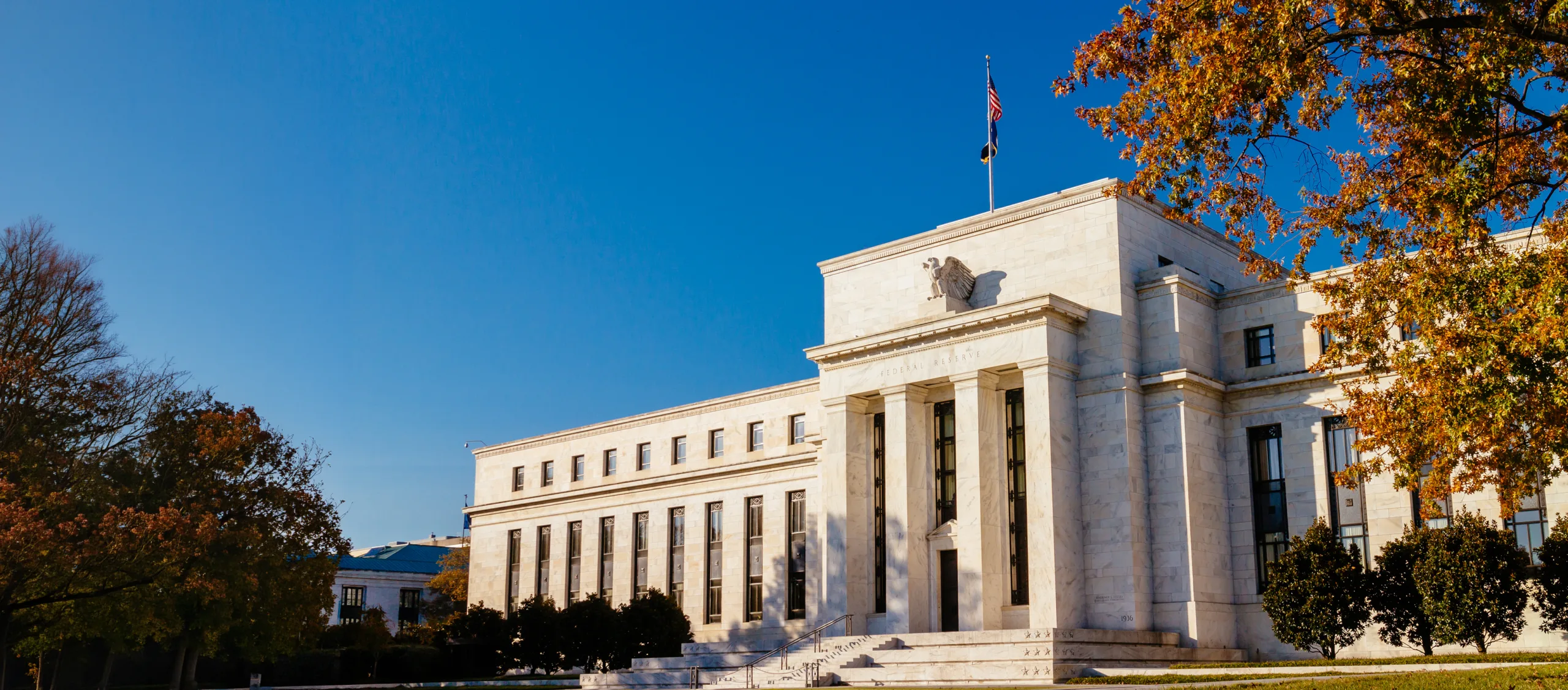
A lot has changed in the financial markets over the last seven months, including the transition to the Warsh Federal Reserve era. When President Trump nominated Kevin Warsh to succeed Jerome Powell as Federal Reserve chair at the beginning of the year, there was wide anticipation that Warsh would be hawkish and narrowly focused, prioritizing inflation control and shrinking the Fed’s direct intervention in the markets.
Reflecting this new era, in early September markets are pricing in one to two quarter-point (25 basis-point) increases to the Federal Funds Rate over the next 12 to 18 months. This would push the benchmark rate from its current 3.50%-3.75% target range up to or slightly above 4.00%. Notably, this is a complete reversal from the beginning of the year when the market anticipated rate cuts.
A Different Kind of Fed
Since being sworn in mid-May, Chairman Warsh has overseen two Federal Open Market Committee (FOMC) meetings. At the late-July meeting, the Fed left interest rates unchanged, though three dissenting regional bank presidents, who favored an immediate rate hike, underscored growing market uncertainty surrounding future Fed policy.
Warsh’s aim to minimize the Fed’s market presence has begun, symbolically at least, with shorter FOMC press releases and his decision to omit his own interest rate projections for the Fed’s “dot plot.” Having served as a Fed governor from 2006 to 2011, Warsh supported initial emergency liquidity when markets locked up during the 2008 financial crisis but has long advocated against the central bank’s expanding role and ongoing quantitative easing.
To revamp the Fed’s approach, Warsh has established five task forces to reexamine core functions:
- Communications to evaluate policy signaling and what guidance the Fed conveys to the public.
- Balance Sheet Policy to assess the scale and long-term implications of the central bank’s holdings.
- Data to improve the quality of the real economic signals the Fed relies upon to make policy decisions.
- Productivity and Jobs to consider the economic impact of transformative new technologies like AI.
- Inflation Frameworks to analyze drivers of inflation.
These structural changes could prove significant. For example, FOMC governors might begin utilizing real-time inflation data or adopting entirely new analytical frameworks for considering inflation. Ultimately, Warsh wants financial markets to independently assess economic and financial data rather than look to the Fed for guidance.
Broadening Geopolitical and Inflationary Risks
The shift toward a less interventionist Fed arrives just as inflation risks have broadened across several fronts. The 2026 conflict in the Middle East has created substantial energy market disruptions, with Iranian retaliation targeting Persian Gulf infrastructure and restricting shipping through the Strait of Hormuz. Consequently, oil prices spiked from under $70 per barrel to over $110 per barrel before settling in the $80 range. This volatility flowed directly to consumers, pushing national gasoline prices from under $3.00 per gallon early in the year to over $4.50 before moderating to just under $4.00.
Despite these spikes, the U.S. economy today is less vulnerable to energy shocks compared to the memorable 1970s shocks, thanks to strong domestic production and its net exporter status. As a result, economic growth has remained relatively steady, with GDP expanding by 2.0% in Q1 2026 and an estimated 1.5% in Q2, allowing the Fed to focus on inflation rather than employment.
Energy, however, is not the only inflationary pressure. High demand for semiconductor chips and heavy capital spending driven by AI data center buildouts and manufacturing reshoring have strained supply chains. Compounding these pressures is rapid U.S. Treasury debt issuance (over $1.5 trillion anticipated this fiscal year), which pushed the total national debt past $40 trillion in late August. Over time, this unprecedented fiscal expansion threatens to weaken the U.S. dollar, driving up import prices and adding another layer of sticky inflation.
“Ultimately, we are planning for persistent 3%+ inflation for the foreseeable future…”
While new AI technologies may eventually have a deflationary impact, the timing and extent of those productivity gains are difficult to predict. Ultimately, we are planning for persistent 3%+ inflation for the foreseeable future, rather than a quick return to lower pre-2020 levels.
Strategy Impacts for Bonds
What would persistent 3% or higher inflation mean for investors? In simple terms, we believe investors should try to avoid large swings in bond prices (given the risks for higher inflation and thus higher interest rates) while prioritizing attractive income. As such, we favor high-quality bonds that mature in roughly two to five years.
These intermediate-term bonds offer a key advantage in the current environment: because bond prices and interest rates move in opposite directions, their prices are less sensitive to interest rate hikes than longer-dated bonds (what investors call having a shorter duration). This helps insulate portfolios if rates continue to rise. To illustrate the vulnerability of longer-duration bonds, yields on 10-year and 30-year U.S. Treasuries have increased substantially this year, from 4.15% and 4.85% to 4.65% and 5.20%, respectively, resulting in significant price declines.
Interest rates on shorter-term fixed-income securities remain attractive, with 6-month U.S. Treasury bills yielding around 3.95% and 2-year Treasury notes offering around 4.25%. By contrast, corporate bonds are currently offering very little extra yield compared to risk-free Treasuries, making them less appealing. If an investor is not paid to take on risk, the risk-free option of U.S. Treasury and agency securities makes the most sense.
In taxable accounts specifically, we are targeting tax-free yields near 3% by utilizing select callable municipal bonds (with calls typically arriving within two to six years) and adding some newer municipal bond issuers. In some cases, U.S. Treasury notes might make more sense than municipal bonds.
Our baseline expectation is the Fed will leave rates unchanged for at least the next six to twelve months. However, Chairman Warsh’s presentation at the Jackson Hole conference at the end of August underscored concerns over inflation, meaning an interest rate hike by yearend is possible. We have shortened our average duration and taken a more defensive posture across bond portfolios, locking in yields at or above 4%, which appears to offer real returns going forward.
The above information is for educational purposes and should not be considered a recommendation or investment advice. Investing in securities can result in loss of capital. Past performance is no guarantee of future performance.