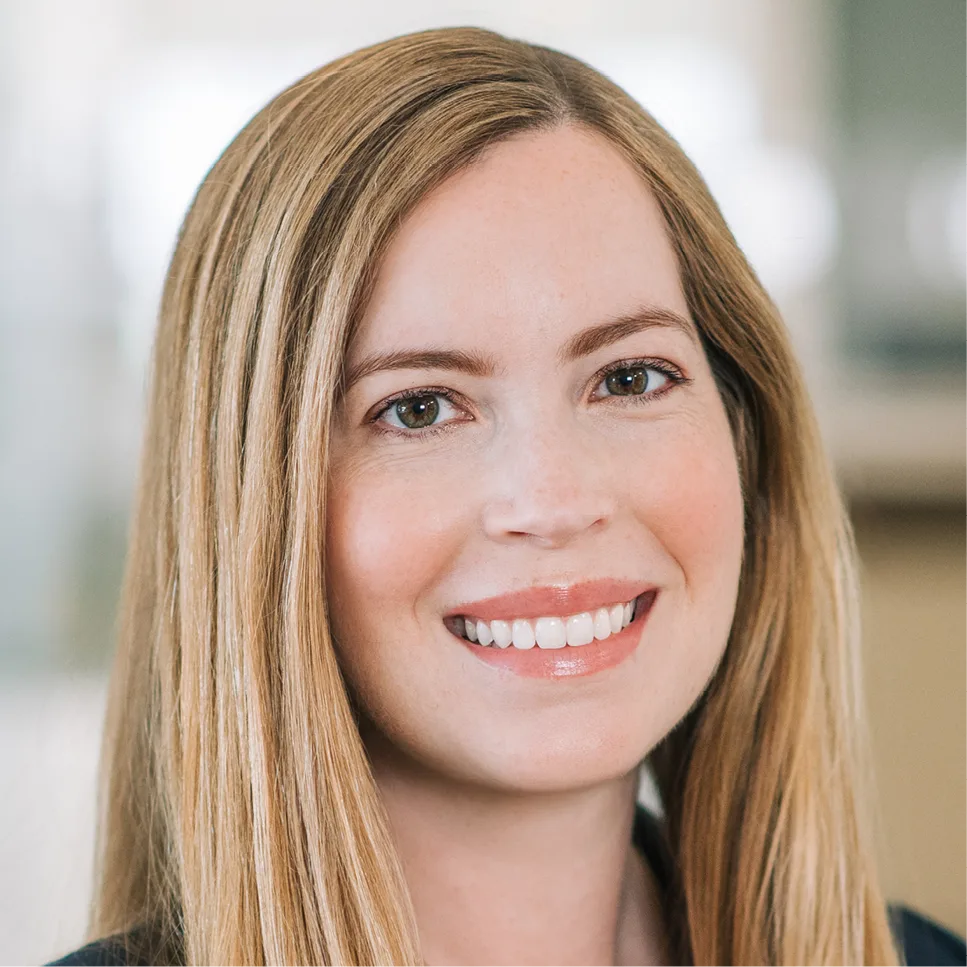
This year, Clifford Swan Investment Counselors celebrates two major milestones: our 110th anniversary and a decade since returning to 100% employee ownership under the leadership of then CEO and Board Chair Linda Davis Taylor. To celebrate, we invited past and current leadership to a “fireside chat” to reflect on their professional journeys: what brought them to the firm, the moments that shaped their perspectives, and the client stories that stayed with them.
What emerged reaffirmed why we do what we do. These candid reflections remind us that behind every portfolio is a person navigating real life, including transitions, uncertainties, hopes, and fears. As we welcome new team members, these stories ground us in our history and help light our path forward. In this article, we highlight key themes from these conversations. We are also excited to share the full responses internally as a permanent record of our firm’s development.
To our clients: thank you for trusting us with the stewardship of your wealth. To those who shared their stories: thank you for this window into 110 years of service.
Defining a New Profession
When A.M. Clifford founded the firm in 1915, he pioneered a model of independent advice without selling products. He formalized this commitment in 1921, permanently ceasing broker-dealer activities to serve exclusively as an investment counselor. It was a bold move that set the stage for our firm and industry. An original founder of The Investment Counselors Association of Southern California (est. 1937), Clifford was instrumental in developing professional standards for the industry and laying the groundwork for today’s national organization, the Investment Adviser Association.
Mr. Clifford’s disciplined approach was tested early. In December 1928, believing financial equilibrium had been lost, he advised clients to divest from the stock market, a move many considered foolish. When the market crashed in October 1929, his foresight validated his fundamental, research-based approach. This philosophy has served clients through several market cycles since.
“When the market crashed in October 1929, his foresight validated his fundamental, research-based approach.”
History has a way of repeating itself. At a 90th anniversary event in 2005, soon after the dot-com bubble burst, then Director of Research Ralph Weil read aloud A.M. Clifford’s warnings of the Great Crash. Attendees were struck by how similar the warnings felt to their recent experience. The firm’s disciplined approach meant client portfolios declined roughly 10% during that downturn while market losses exceeded 50%.
“It’s a People Business”
Decades later, a parallel legacy was built. Philip V. Swan, who worked at Clifford Associates early in his career, founded his own firm in 1984 with that same dedication to clients’ best interests. As one colleague recalled, “For Phil, it was not just about investments: it was a people business and building lasting relationships with clients was key.”
“For Phil, it was not just about investments: it was a people business and building lasting relationships with clients was key.”
Phil’s approach was distinctive. He believed in meeting clients in their homes and taking them to lunch, not because it was efficient, but because you learned more about people away from an office setting. Michael Davis, who joined Philip V. Swan Associates in 1994, remembered: “Phil took pride in never eating lunch at his desk. He was always out with a client, a prospect, or a referral source. Soon after joining Phil, I learned I was doing client service even on the weekend when encountering clients at the grocery store or AYSO soccer matches. I learned to dress in a nicer pair of jeans because clients did not want to see their counselor in tatters.”
Phil believed that if you put the client first and viewed investment counseling as a life commitment, not a job, success would follow. “The key to retaining clients was to become their trusted family advisor,” Mike explained, “the one the family turned to for advice on all matters—legal, accounting, insurance, home buying, job searches, you name it. If we did not have the answer, we were committed to finding someone who did.”
Phil was also an early and committed supporter of women’s financial independence and the transformative power of education. He shared these passions with Linda Davis Taylor. They met through Scripps College, where Phil served as a long-time trustee. Through working together on various projects over an eight-year period, they discovered a shared commitment to families, financial education, and philanthropy.
Linda eventually joined the firm, explaining her career change as a natural extension of her values: “In addition to agreeing with Phil’s core principles, I was drawn to the opportunity to work with families to encourage open communication about family wealth goals and financial education. My experiences working with families during my years in college admissions and fundraising were instrumental in my belief that financial skills and family success are connected.” During her 21 years at the firm, Linda most loved seeing clients, especially women, gain confidence in their financial lives.
When Pasadena’s two well-established firms, Clifford Associates and Philip V. Swan Associates, merged in 2007, they created something stronger than either firm alone. Clifford’s emphasis on rigorous investment research complemented Swan’s focus on exceptional client service and personalized wealth management.
“We are a customer service company whose product happens to be stocks and bonds.”
Today, that blend continues. Investment counselor and Board member Roger Gewecke (2005–present) often reminds the team of Phil Swan’s wisdom: “We are a customer service company whose product happens to be stocks and bonds.” CEO Peter Boyle, who joined in 1992, affirms: “He could not be more correct. Continue to create an excellent product, but it is our customer service that will set us apart.”
At Points of Vulnerability
Board Chair Kathleen Gilmore, who joined in 2002, has observed when our work matters most. “At a point of vulnerability,” she says, “we seek somebody we trust to help us solve problems. And that comes in all shapes and sizes.”
The “fireside” reflections brought out moving examples of this. Sometimes it’s the transition from a successful family entrepreneur to retiree. Sometimes it’s a couple where the husband has managed the finances but wants his wife prepared to make decisions alone when he’s gone. Sometimes it’s simply hearing: “Your finances are on solid ground.”
Kathleen “Katie” Habegger (1989–2009), shared a story that underscored the trust at the heart of this business. She remembered a client planning how to fund college tuition for her children. Though her husband was a successful doctor, most of their assets were tied up in his practice. When he died suddenly, the family’s world was turned upside down. “She was in pieces,” Katie recalled. “I was so glad to have developed a warm relationship with her over the years. Her situation changed significantly due to life insurance and the practice buyout. We worked together to develop a plan that gave her a secure future and funds for her children’s education.”
How does this level of trust develop? Kathleen Gilmore explains: “You have to genuinely care about that person’s well-being. Ask, ‘What keeps you up at night?’ and then listen to understand those vulnerable places. When you follow through and deliver something that helps, trust builds.”
A Collaborative Culture
At the heart of Clifford Swan’s longevity is a commitment to working together. This collaborative culture stems from a fundamental belief that the firm is stronger when everyone succeeds together. Today, Clifford Swan operates with an unwavering focus on the client, while also recognizing that our clients are served best when our employees are valued, trained, and empowered to contribute their best ideas.
Terrell “Terry” Price (1996–2016) captured this spirit early in Kathleen’s tenure. In her first or second week, Terry took her to a nonprofit client presentation and said, “You’re coming with me and you’re going to do part of this presentation.”
Kathleen reflected with humor: “It was fairly obvious I was thrown in there because all I could do was read the page. But I knew I had found the right firm. There was a reassurance that you don’t have to be perfect from day one; we want you here, and we’re going to teach you. That drove me to pursue my Certified Financial Planner™ designation to build the foundation I needed.”
This investment in people is a recurring theme. Former team members consistently expressed gratitude for the firm’s support. Carolyn Barber (1996–2018) noted how her mentor encouraged her to pursue the rigorous Chartered Financial Analyst® designation. Kevin Cavanaugh’s story also illustrates this. Kevin, who joined in 2011 and formerly led the equity research team, started as Mike Davis’s assistant at a previous firm—his first job out of college. That association led Mike to eventually select Kevin to succeed him thirty years later at Clifford Swan. This multi-generational mentorship has helped the firm thrive for over a century.
Constant Change, Constant Values
“The only thing constant about Clifford Swan has been change,” Peter observes, “yet the core mission remains steady.”
The technological transformation has been dramatic, from floppy disks to cloud-based systems. But the more profound shift has been in the role of information. Peter explains: “As investment professionals, we once had an information advantage. Today, between the internet and the SEC’s 2000 enactment of Regulation Fair Disclosure, our clients have access to the same information we do. We’ve evolved from a source of information to an interpreter of information: What does this information mean for you? What should you ignore? What deserves attention?”
“We’ve evolved from a source of information to an interpreter of information.”
This shift in our role has naturally changed the primary topic of conversations with clients. “Our internal research meetings are more focused than ever on revenue growth, margins, and the underlying strength of a company,” Peter notes. “But in client meetings, we’ve seen an evolution. Clients rely on our portfolio management expertise as a given, which allows our conversations to increasingly expand into tuition planning, gifting strategies, approaches to employee stock options, and Roth conversions. We haven’t moved away from investment fundamentals; we’ve simply layered a deeper level of wealth strategy on top of that rigorous research foundation.”
Looking ahead, the challenge is delivering seamless technological experiences while maintaining human connection. As Peter emphasizes: “Use technology, but only if it doesn’t take you further away from your client. Emails and Zoom are easy and convenient, but relationships are built and nurtured over phone calls and in-person meetings.”
Looking Ahead
As we mark 110 years, we carry forward the legacy of those who built this firm.
Mike Davis, reflecting on his years learning from Phil Swan, offered a guide to client service that still resonates: Listen. Be the first to reach out. Avoid mistakes because they erode trust. Admit errors immediately and fix them. Be fully prepared. Keep presentations short and make eye contact. Take notes and follow through quickly. Most importantly: “Do not try to impress a client with how smart and well educated you may think you are. Communicate clearly and avoid investment jargon.”
Linda Davis Taylor emphasized the right mindset: “Bring a sense of urgency to work every day and deploy it passionately in service to your clients and your colleagues. Do not underestimate the growing impact of women as financial decision-makers.”
Sharon Bachert, who concluded her 33 years at the firm in 2025 leading the Client Service Team, spoke to the next generation: “Our work is ultimately about people. Behind every portfolio is someone navigating real life. Listen deeply. Communicate clearly.” Your dedication can be shown in “small, everyday moments, like driving to a client’s home to notarize documents when they are unable to come into the office.”
Kathleen, reflecting on what she hopes never changes, circles back to where we began: “We have nearly 1,000 families we are responsible for, plus all the families who work here. For management, it’s a huge weight, a privilege, and an honor. If we keep that top-of-mind, I think we’ll do just fine.”
Over 110 years, the tools, markets, and regulations have changed. But our values remain constant: integrity, earning trust, genuine care for clients’ well-being. That’s our history and our future.